
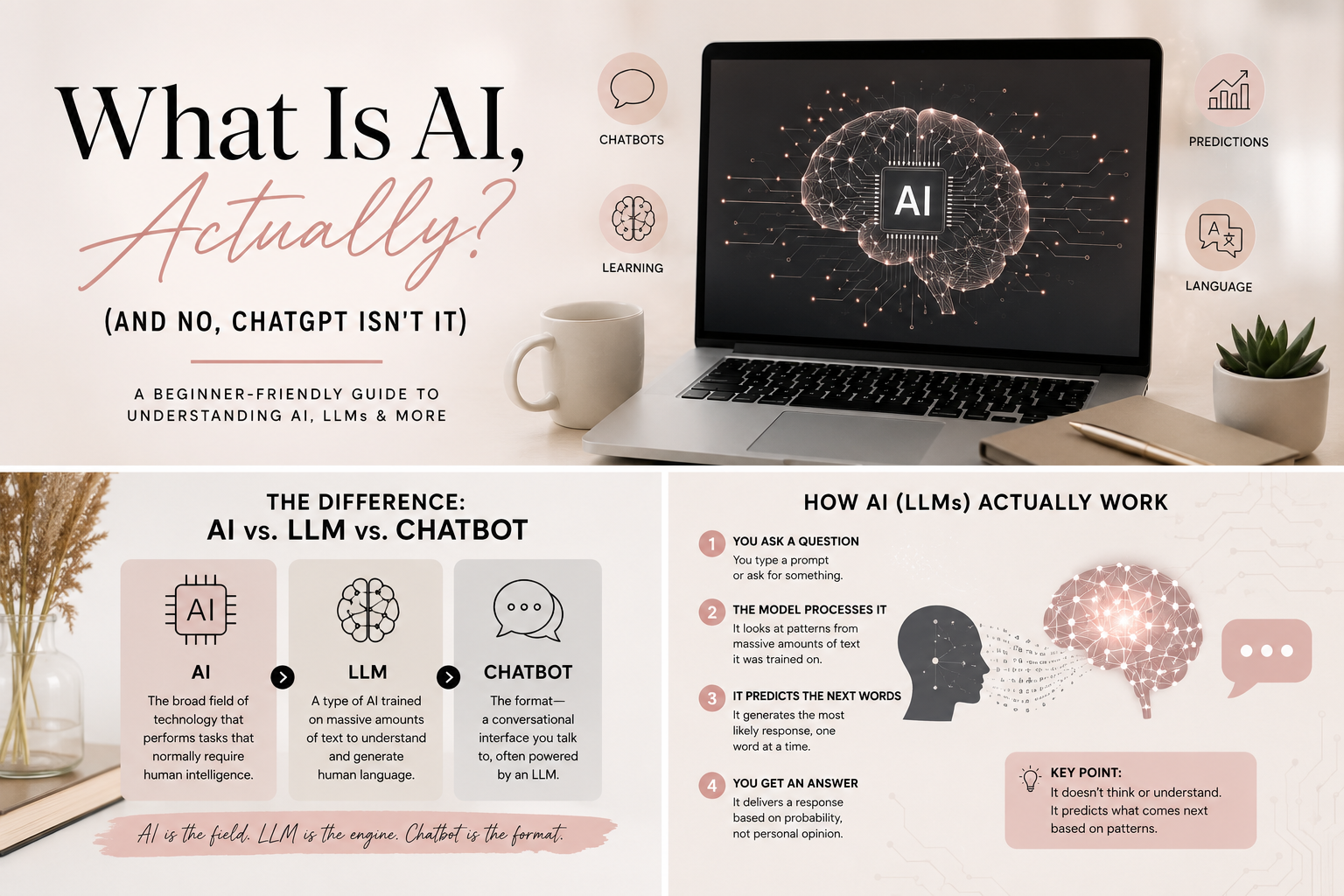
AI is the broad field of technology that lets computers do things that usually require human thinking: recognizing patterns, understanding language, making predictions. ChatGPT, Gemini, and Claude aren’t AI itself. They’re products built using AI, specifically a type called an LLM (large language model). That distinction matters, and it’s the thing almost nobody explains clearly. So let’s start there.
Is ChatGPT the Same Thing as AI?
No. This is the mix-up almost everyone makes when they’re starting out, and it’s an easy one to make because ChatGPT is usually the first “AI thing” people ever touch.
Here’s the actual relationship: AI is the category. ChatGPT is one specific product in that category.
Think of it like this: “vehicle” is the broad category. “Honda Civic” is one specific product in that category. A Civic is a vehicle, but it’s not the only vehicle, and knowing what a Civic is doesn’t tell you everything about vehicles in general.
Same setup here. AI is the category. ChatGPT is one product built on AI. So is Gemini. So is Claude.
What’s the Difference Between AI, an LLM, and a Chatbot?
These three words get used like they’re interchangeable. They’re not. Here’s what each one actually means:
AI (Artificial Intelligence) is the general field. It covers any technology designed to perform tasks that normally require human intelligence, from the recommendation system that suggests what to watch next, to the spam filter in your email, to the tools we’re about to talk about.
LLM (Large Language Model) is a specific type of AI. It’s a model trained on large amounts of text so it can generate language that sounds natural: answering questions, writing paragraphs, holding a conversation. ChatGPT, Gemini, and Claude are all LLMs.
Chatbot just describes the format, a tool you talk to through a back-and-forth conversation. Old-school chatbots (the clunky ones that only understood a few set phrases) weren’t AI at all, just scripted responses. Today’s chatbots like ChatGPT are chatbots that happen to be powered by an LLM. The format is “chatbot.” The engine underneath is the LLM. The category the engine belongs to is AI.
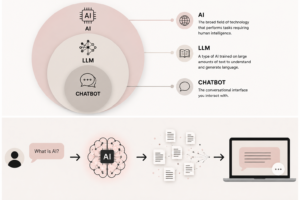
So the full picture: AI is the field. LLM is the type of AI. Chatbot is the format you interact with it through.
Does AI Actually “Think”?
No. This is worth clearing up because it changes what you should expect from it.
An LLM doesn’t think, understand, or have opinions the way a person does. What it actually does is predict the most likely next word, based on patterns it picked up from huge amounts of text it was trained on. That’s it. It’s an extremely good pattern-matcher, not a mind.
That’s why it can write a convincing paragraph and also confidently get a fact wrong in the same breath. It’s not “checking” what’s true, it’s generating what’s statistically likely to come next. Useful to know before you trust it with something important.
The “Big Three” You’ve Probably Heard Of
Three names come up constantly: ChatGPT, Gemini, and Claude. All three are AI products, specifically LLMs, built by different companies (OpenAI, Google, and Anthropic).
They’re not the same tool wearing different logos. Each has its own strengths, quirks, and best use cases, but that’s a bigger topic than this article. We’ll break down how they compare and which one’s right for a beginner in the next piece. For now, just know: when you hear any of these three names, you’re hearing about a specific AI product, not AI as a whole.
Wait, Is AI Going to Take Over?
Quick answer: no, not in the way movies make it sound. What we have right now are tools that are very good at specific tasks: writing, answering questions, spotting patterns. They don’t have goals, self-awareness, or the ability to act on their own outside of what a person asks them to do. It’s a powerful tool, not a runaway mind. Worth keeping in perspective and then moving on.
The Actual Takeaway
AI is the category. ChatGPT, Gemini, and Claude are products in that category, and specifically they’re LLMs, tools that predict likely responses based on patterns, not tools that think. Once that distinction clicks, everything else about AI gets a lot less confusing.
And once you know what AI actually is, the next natural question is how tools like these actually get used, including for something like running an online store. That’s something we’ll get into next.
Leave a Reply