
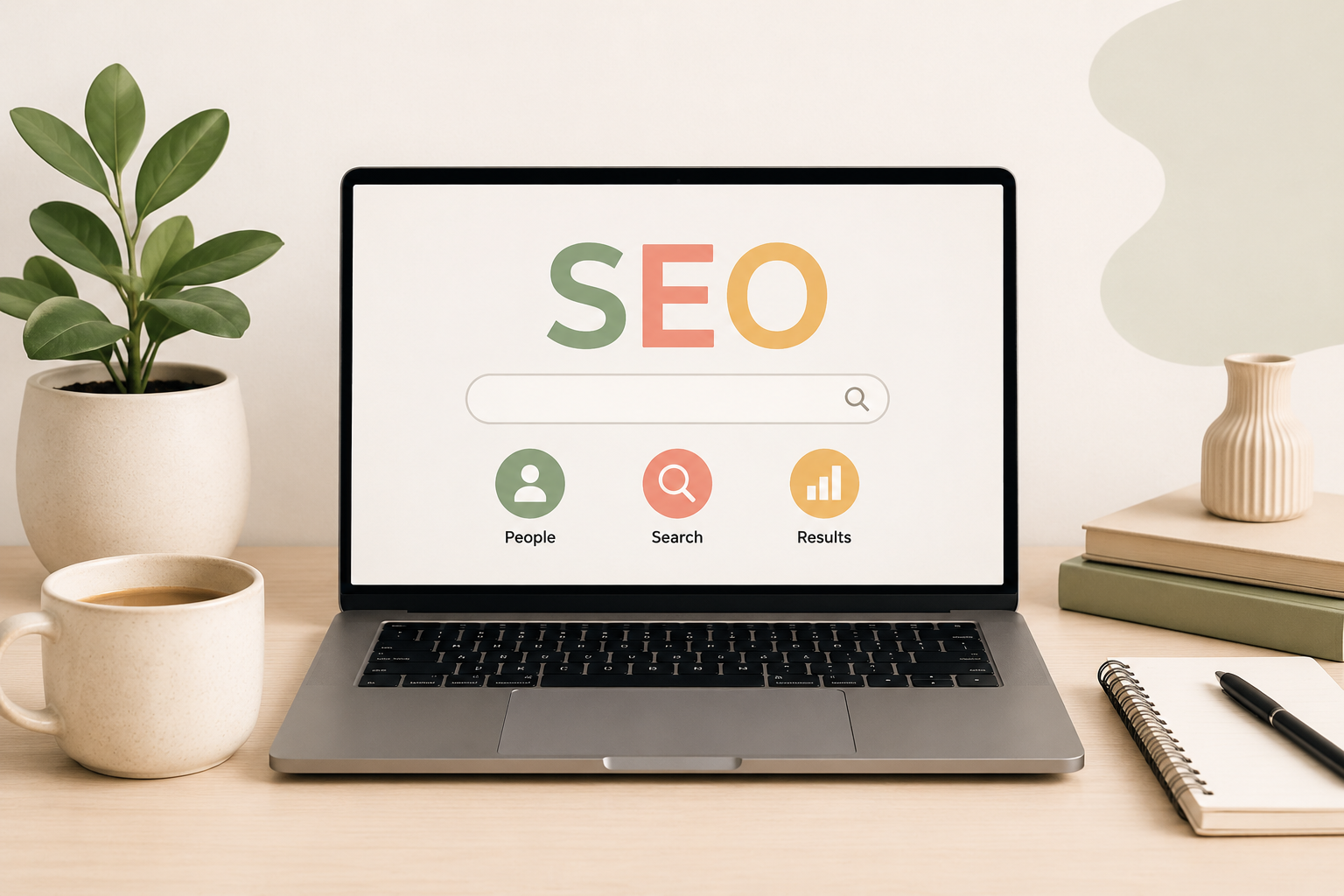
SEO stands for search engine optimization. That’s it. That’s the whole term. It just means setting up your content so Google (or whatever search engine) can find it, understand it, and show it to people who are searching for what you sell.
Here’s the easiest way to think about it: imagine two stores selling the exact same yoga mats. One is on Main Street, with a sign out front and a spot on the map. The other is down an unmarked alley three blocks over, with no sign at all. Both stores have great yoga mats. Only one of them gets walked into.
SEO is the work of putting your store on Main Street instead of the alley.
That’s the one metaphor we’re using for this whole article. Every time SEO does something for you, it’s making sure your shop isn’t the one hidden in the alley.
SEO vs. Ads: What’s the Difference?
This is the first thing people mix up, so let’s clear it up early.
Ads are you paying to skip the line. If you run ads, you’re paying to have your yoga mats show up at the top of the search results, above everyone else. The second you stop paying, you disappear from that spot. It’s rented space.
SEO is you actually building a good location. With SEO, you’re not paying Google directly to show up. Instead, you’re doing things that make your yoga mat page easy to find and useful. Google puts you near the top because you earned it, not because you paid for it. That spot doesn’t vanish the moment you stop spending money. It sticks around, though it takes longer to get there in the first place.
Neither one is “better” across the board. Ads get you seen today. SEO gets you seen for months or years without paying for every single visit. Most sellers end up doing some of both, but this article is about SEO specifically.
So What Does SEO Actually Involve?
Sticking with the yoga mat example: if you sell yoga mats online, SEO means making sure that when someone types “best yoga mat for a small apartment” into Google, your page is one of the pages that shows up.
To do that, a few things need to be true:
Google has to know your page exists. No sign on Main Street means nobody knows the store is there, even if it’s a great store. This is the most basic layer. Your page has to actually be out there for Google to find in the first place.
Your page has to match what people are actually searching for. If your page is titled “Premium Yoga Products” but nobody searches that (they search “yoga mat for bad knees”) you’ve built a beautiful store with a sign that doesn’t match what people are looking for. SEO means using the words people actually type, not just the words that sound nice to you.
Your page has to be worth showing. Google doesn’t just wanna find pages, it wants to recommend good ones. If someone clicks through to your yoga mat page and it loads slowly, or it’s confusing, or it doesn’t answer their question, Google notices that people bounce off it fast. Over time, that page stops getting recommended. A good store isn’t just easy to find, it’s worth walking into.
That’s genuinely most of it. Everything else you’ll read about SEO is a more detailed version of one of those three things.
What This Article Is Deliberately Not Covering
Most “beginner” SEO guides promise to keep it simple, then two paragraphs later you’re reading about backlinks, meta descriptions, crawl budgets, and domain authority. That’s not a beginner explanation anymore. That’s a glossary.
This article isn’t going to do that. You don’t need a list of ten SEO terms to understand what SEO is. You need the three things above. The terms come later, once you’re actually doing the work. At that point, they’re a lot easier to understand anyway, because you’ll have context for what problem each one is solving.
The Takeaway
SEO is the practice of making your page easy for search engines to find, easy to match to what people are actually searching for, and worth recommending once someone gets there. It’s the difference between a shop on Main Street and a shop in an alley nobody walks down. It’s not the only way to get found online (ads exist for a reason) but it’s the way that doesn’t disappear the moment you stop paying for it.
Leave a Reply